Keeping memory alive in the places where History was written
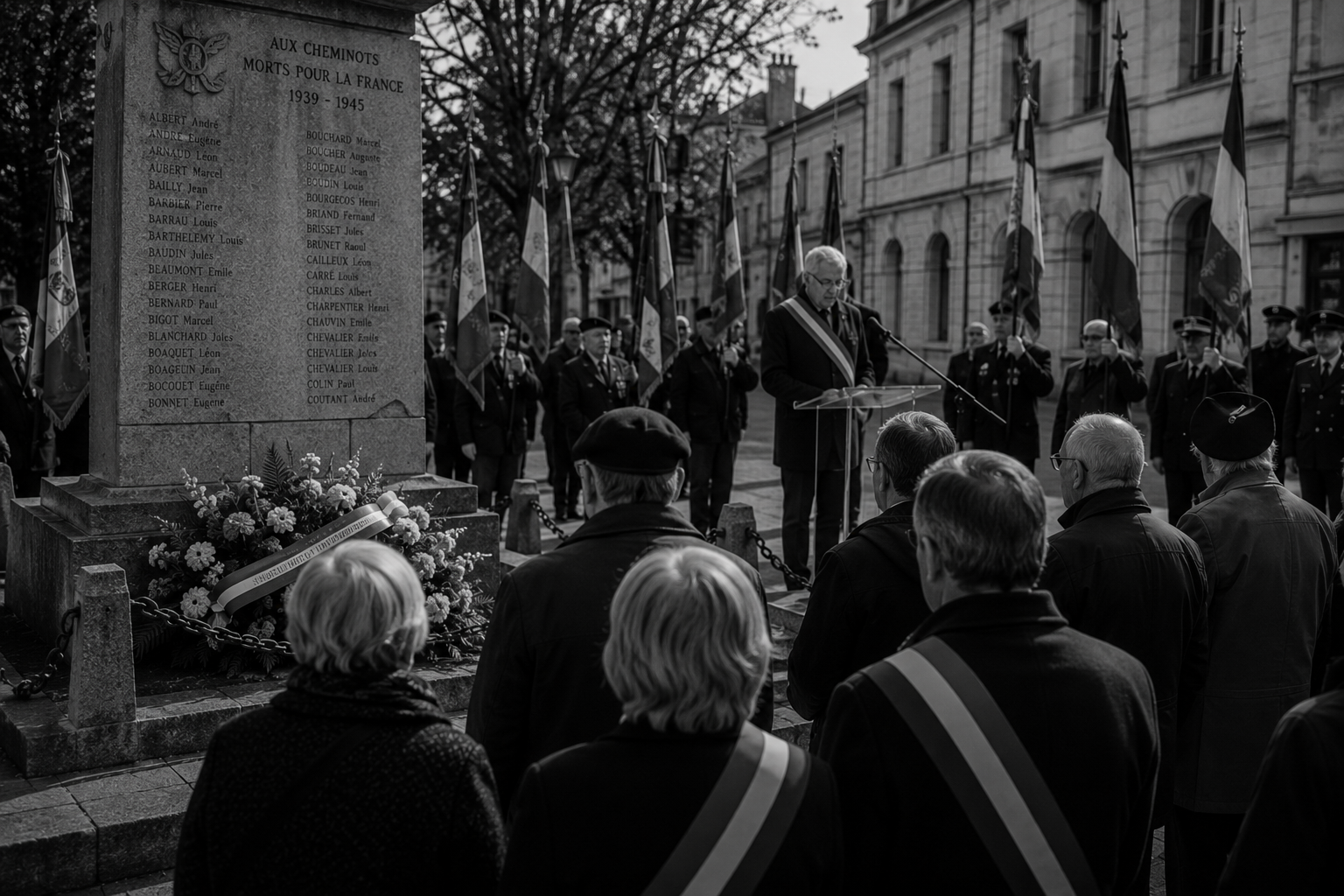
Commemorative events are moments of tribute, transmission and reflection. They pay tribute to the victims of persecution and deportation, to Resistance members and to all those who faced the war and the Occupation.
Organised on national dates or on occasions linked to a region’s history, these ceremonies shed light on events and stories that marked the Second World War. They bring together families, railway workers, associations, local authorities and residents around a shared history and help pass on its memory to future generations.
This work takes on a particular significance when commemorations take place in the very locations where events occurred. Stations, railway premises and sites then become spaces of memory, raising awareness of the history of these places and the fates of those who faced war, persecution or repression there.
Inscribing memory through commemorative plaques
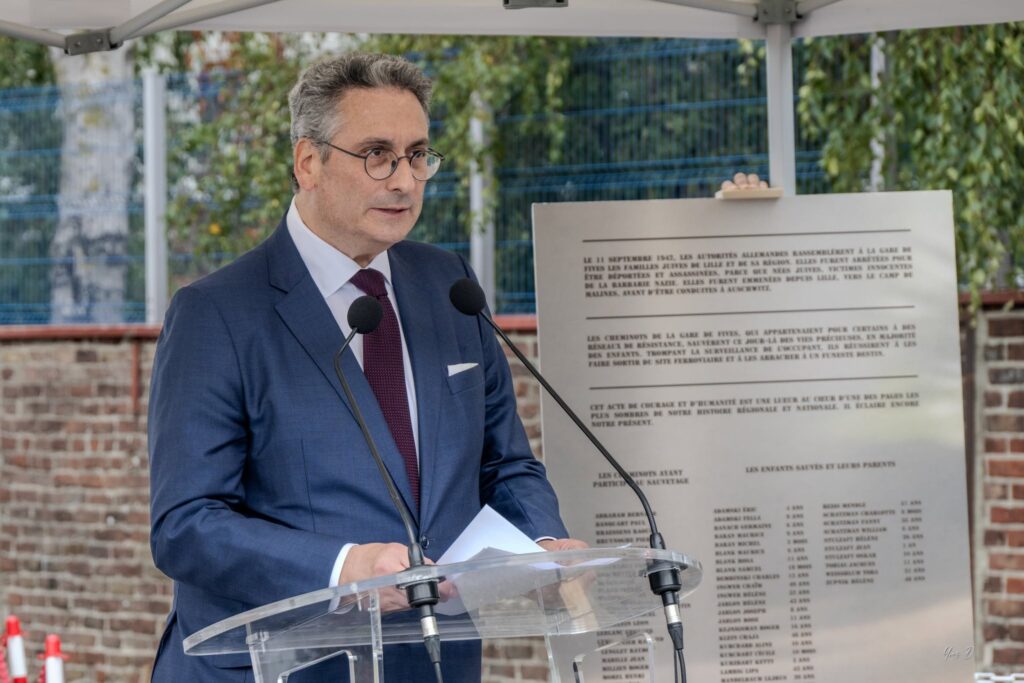
Memory is also passed on over time. Installing commemorative plaques inscribes the events and the fates associated with them into these places, offering everyone a point of reference to discover or rediscover their history.
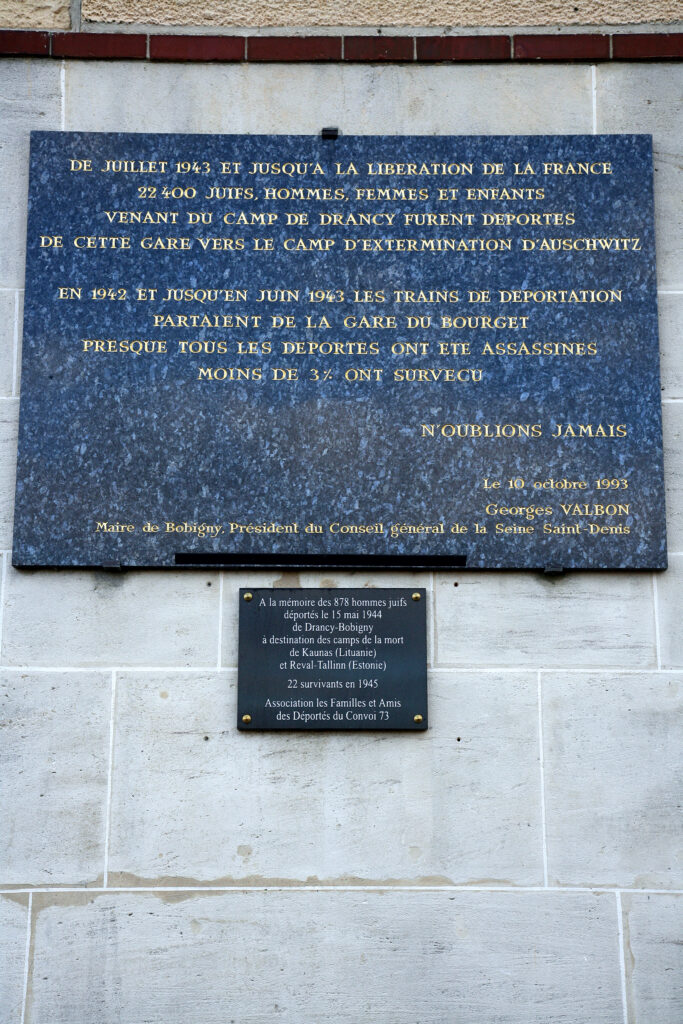
Installed in stations and at the railway sites concerned, these plaques bring visibility to stories that are sometimes little known. They notably pay tribute to the victims of persecution and deportation, as well as to railway workers involved in the Resistance or who fell victim to repression.
Through their presence in public space, they serve as landmarks of memory accessible to all. They are a reminder that railway sites are also places of history, where events unfolded and where women and men lived, resisted, suffered or died during the Second World War.