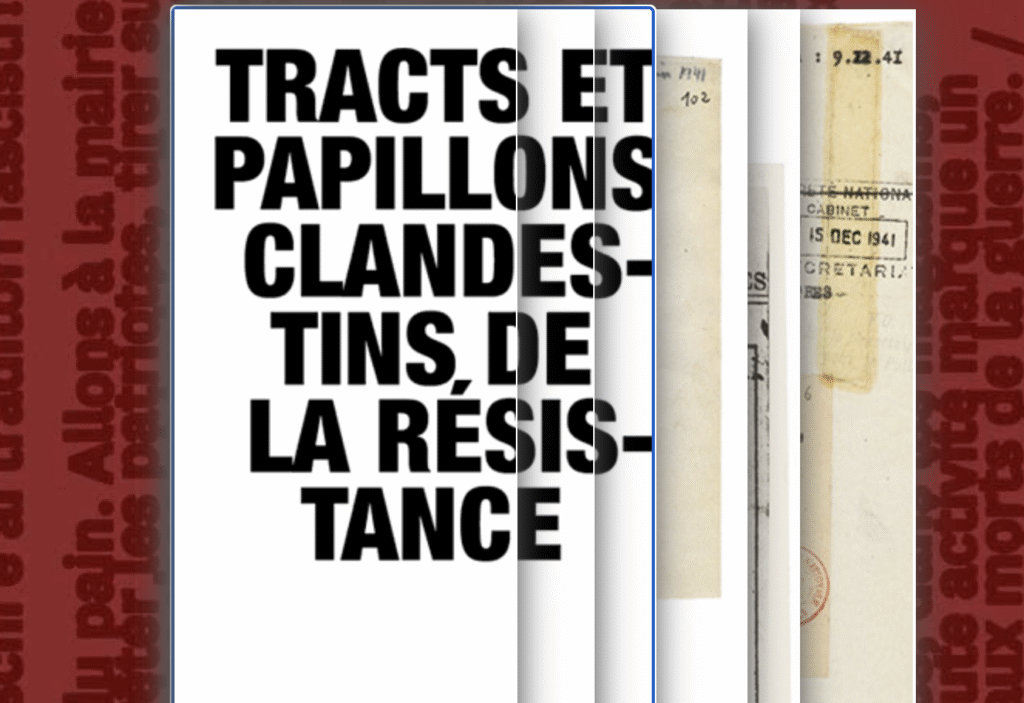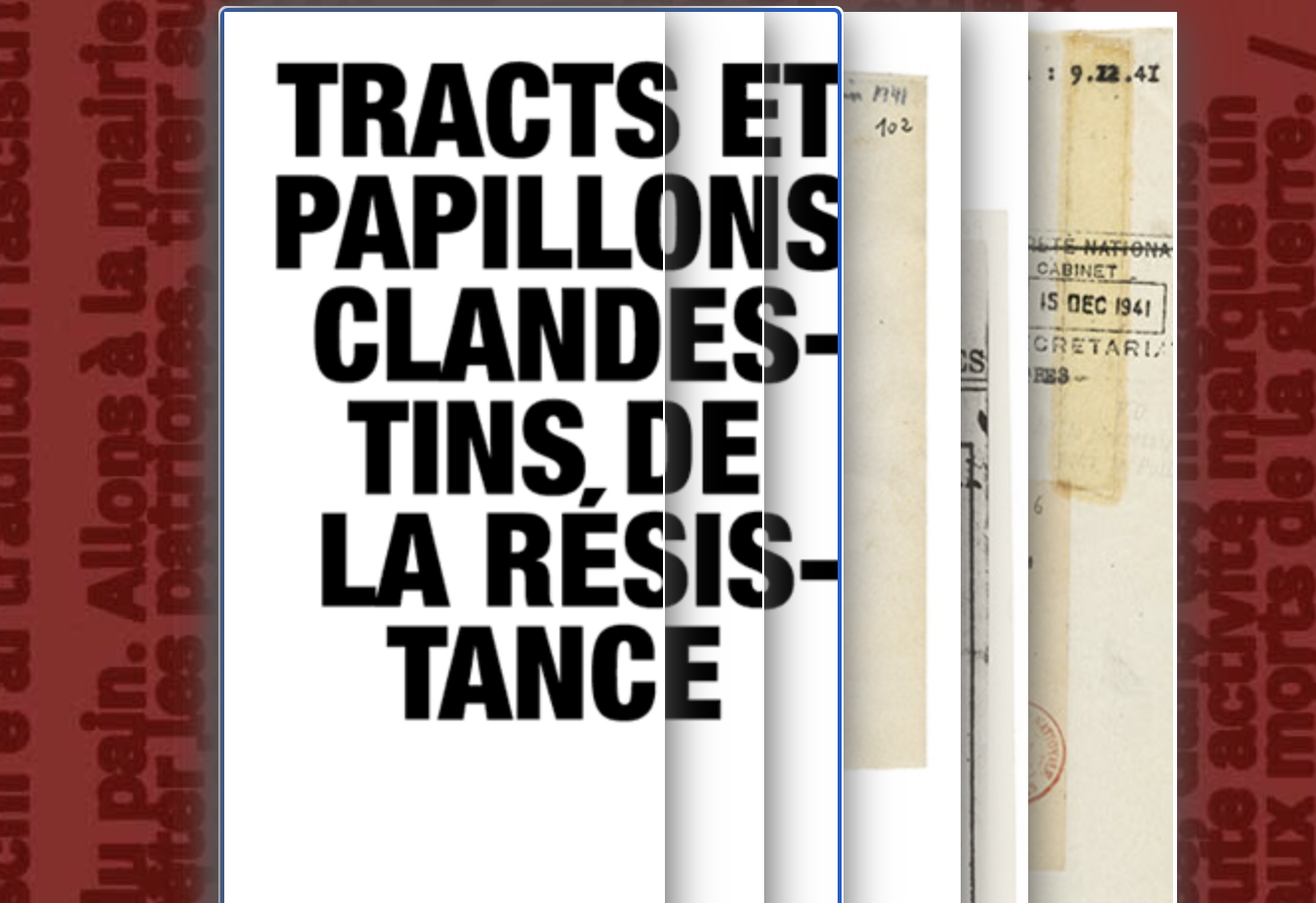
Tracts et papillons clandestins de la Résistance, Papiers de l’urgence (« Clandestine Resistance leaflets and flyers, Papers of urgency »), published by Éditions Artulis in 2015 with the support of SNCF, brings together and analyses a selection of these documents held at the Réserve des livres rares of the Bibliothèque nationale de France.
Papers made to disappear
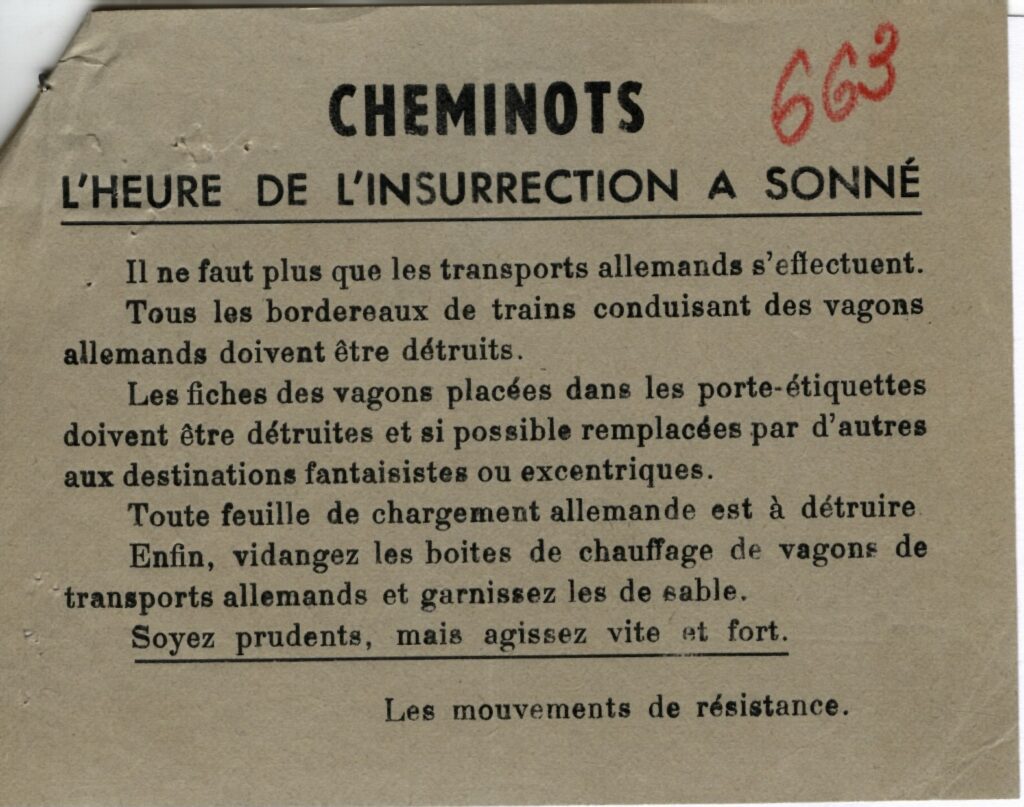
Leaflets and « papillons » — these small papers meant to be stuck up in public spaces — hold a singular place in the history of the Resistance. Produced clandestinely, often in urgency and at the risk of those who wrote and distributed them, they were designed to circulate quickly and disappear just as fast.
Yet some have survived the decades. Handwritten, mimeographed or printed, these fragile documents are today precious sources for understanding the years of the Occupation and the various forms taken by Resistance commitment.
Documents at the heart of clandestine life
These few lines of text, sometimes accompanied by drawings, slogans or instructions, could serve multiple purposes: informing, denouncing the occupying forces’ propaganda, calling for mobilisation, or encouraging the continuation of the struggle. Distributing them required discretion and speed, in a context where producing and possessing clandestine documents could expose their authors and readers to severe punishment.
Through their content as well as the conditions under which they were made and circulated, these papers bear witness to the daily reality of clandestine life and the desire to circulate a voice different from that imposed by official propaganda.
An exceptional collection
The book Tracts et papillons clandestins de la Résistance, Papiers de l’urgence (Éditions Artulis, 2015) offers a chance to discover these sources in their physical form and to understand the context in which they were produced and circulated. It thus highlights a particularly fragile documentary heritage, whose preservation now makes it possible to study, at close range, the forms of clandestine communication during the Second World War.