
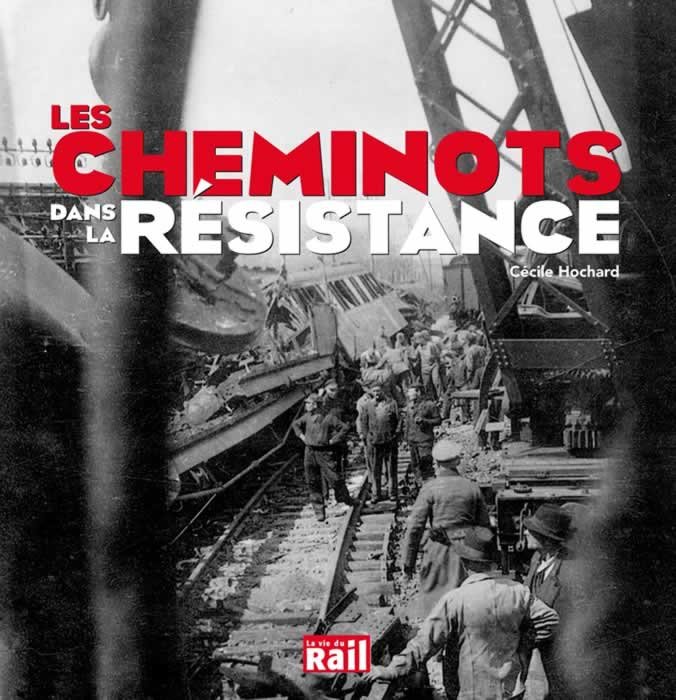
Published in December 2011 by Éditions La Vie du rail, Les Cheminots dans la Résistance grew out of the exhibition of the same name, produced as part of a partnership between the Fondation de la Résistance and SNCF. Written by historian Cécile Hochard, the book draws on numerous archival documents to shed light on the situation of SNCF and its staff during the Second World War.
A book grounded in the archives
The book gives significant weight to archival documents, which help reconstruct events and bring individual stories to light. Administrative records, correspondence, photographs and other sources thus shed light on the life and work of railway workers during the war years.
These archives also make it possible to place individual acts of engagement within the particular context of SNCF under the Occupation, a company subject to constraints imposed by the occupying forces, within which each employee could be confronted with different situations and choices.
Many forms of Resistance
Cécile Hochard shows the diversity of railway workers’ involvement. Some joined Resistance movements or networks; others acted individually, sometimes within the course of their professional activity.
Intelligence gathering, passing on messages, distributing the clandestine press, helping people being sought, producing forged papers or sabotage: the forms of action were numerous and evolved over the course of the conflict. They reflect different paths and motivations, but also the diversity of situations railway workers faced.
Beyond the “battle of the rails”
The book thus moves beyond a portrayal of railway workers’ Resistance long associated solely with the image of the “battle of the rails”. It presents a broader history, made up of organised and individual acts of engagement, and of actions that were sometimes visible and sometimes more discreet.
Through these various stories, Les Cheminots dans la Résistance helps raise awareness of the history of railway workers during the war and shows the importance of archives in preserving and passing on their memory.