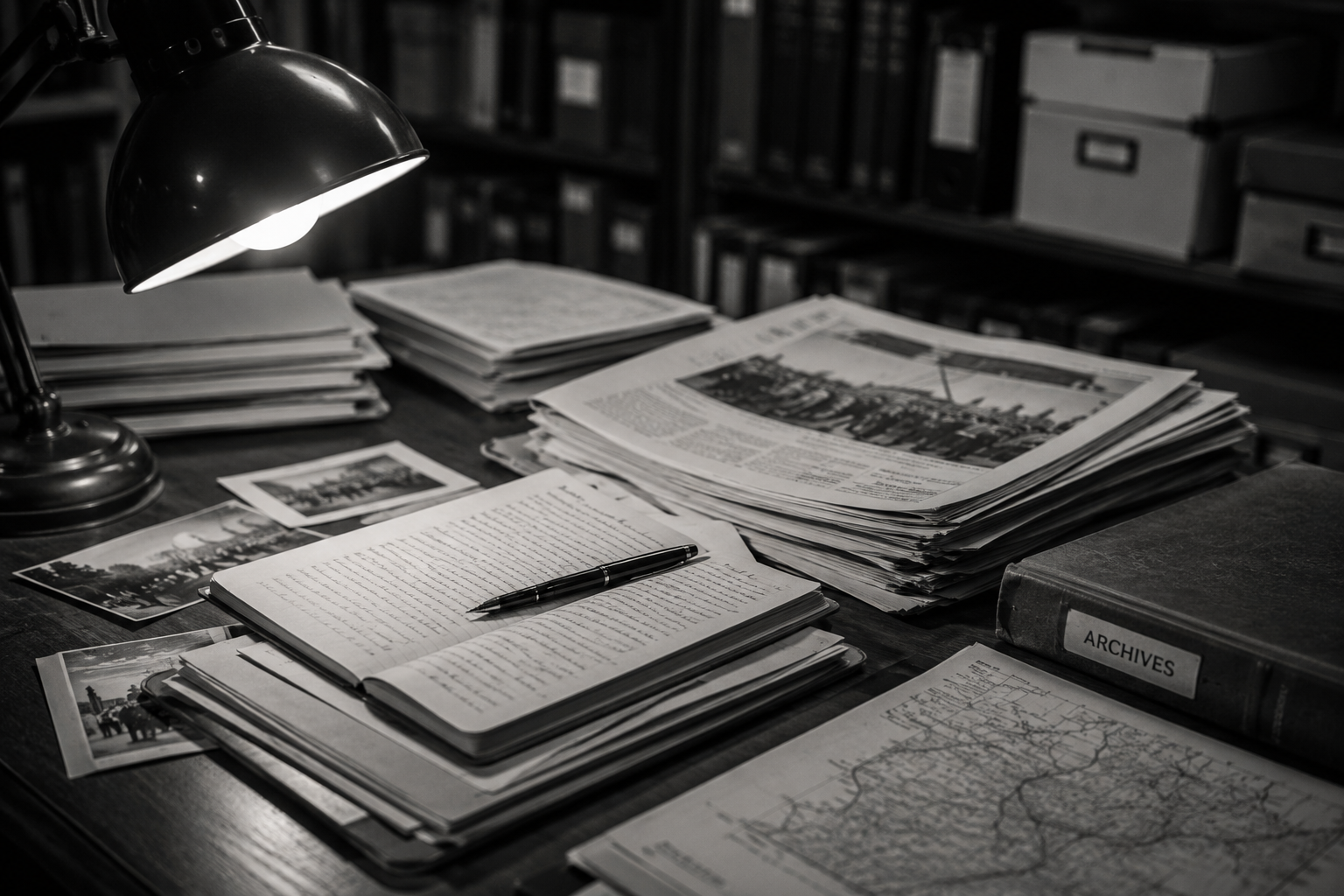
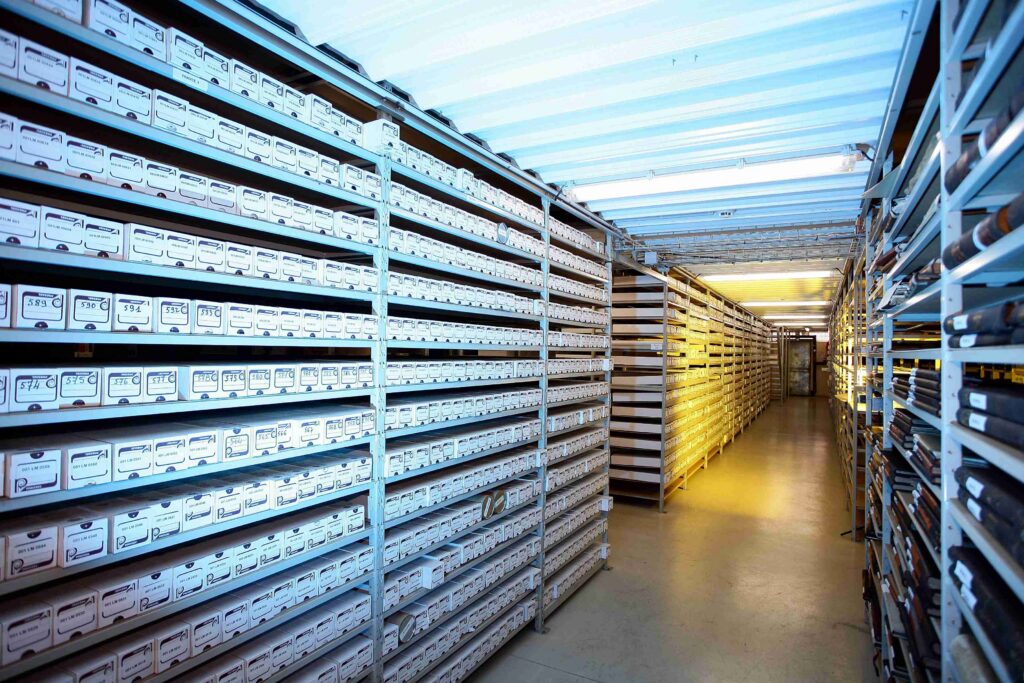
Held at SNCF’s Centre national des archives historiques, in Le Mans, the collection devoted to the 1939-1945 period brings together more than 1.4 million documents. It documents the organisation, activity and changes of the rail network in a context profoundly marked by the war and the Occupation. These archives offer essential insight into the history of SNCF and the French railway during the Second World War.
A collection fully accessible
The entire 1939-1945 collection held by SNCF was digitised and put online in 2012, as part of an approach based on transparency, historical research and the passing on of memory. The archives can be consulted:
- online, on the website of the Service Archives Documentation (SARDO);
- on site, at SNCF’s Centre national des archives historiques, in Le Mans.

Browse the 1939-1945 archives online
The website of SNCF’s Service Archives Documentation
Discover the Centre national des Archives historiques
A branch of the Service Archives Documentation
The contents of the 1939-1945 records
The archive collection brings together documents produced by SNCF’s various bodies and departments, notably:
- the archives of General Management and the central departments;
- the archives of SNCF’s five regions;
- regulatory texts and documents relating to the company’s organisation and operation;
- records relating to the operation and management of the rail network during the war;
- documents attesting to the relations between SNCF and the French and German authorities.
These sources make it possible to study many aspects of SNCF’s history between 1939 and 1945: the organisation of the network under the Occupation, relations with the German authorities, the decisions taken by the company’s leaders, the operating conditions of the railway, and the consequences of the war on the running of the network.
They are thus essential material for researchers, historians and anyone wishing to deepen their knowledge of this period.
SNCF’s archives are public archives and are disclosable in accordance with the provisions of the Code du patrimoine (French Heritage Code). Documents from the 1939-1945 period are, except where the law provides otherwise, freely available for consultation.
Some records, particularly those containing personal data or relating to railway accidents, may however be subject to disclosure time limits. A request for consultation by exemption can then be sent to SNCF’s Centre national des archives historiques.
Good to know
The archive collection does not contain the nominative lists of deported people. These documents, where they exist, are held by other institutions specialising in the memory of the Holocaust and the Deportation.
To carry out research on the convoys, the victims or the deportation routes, we invite you to consult the documentary collections of the Mémorial de la Shoah, which are the reference on the subject. Their database, archives and research tools provide access to information on the deportees, the places of detention and the railway routes used during this period.