
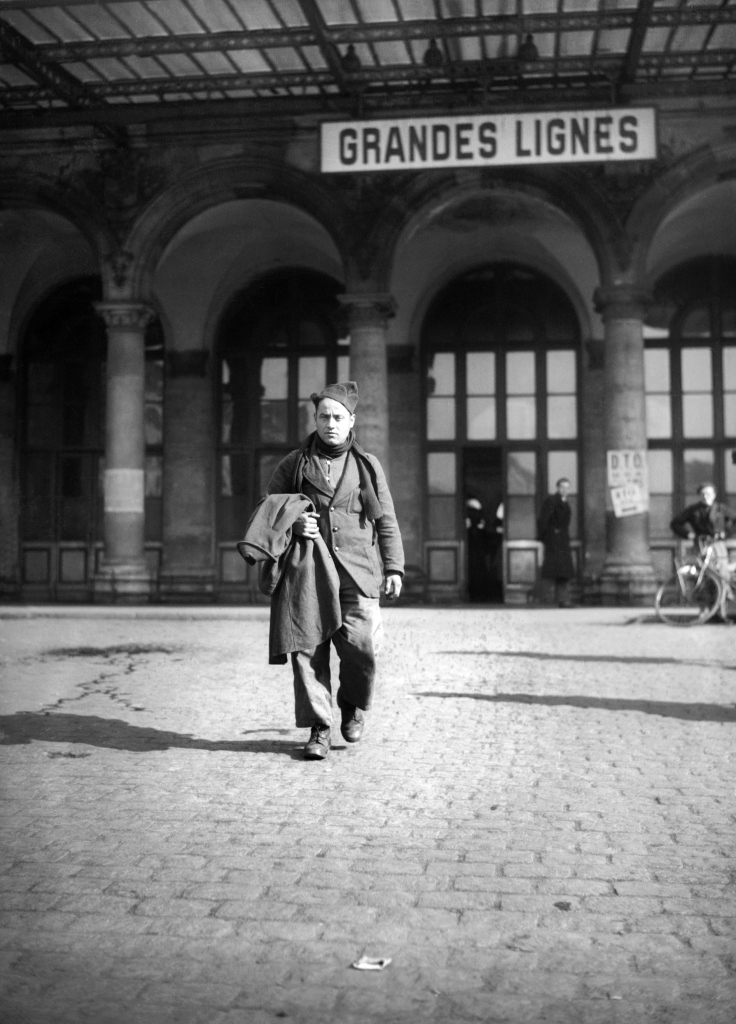
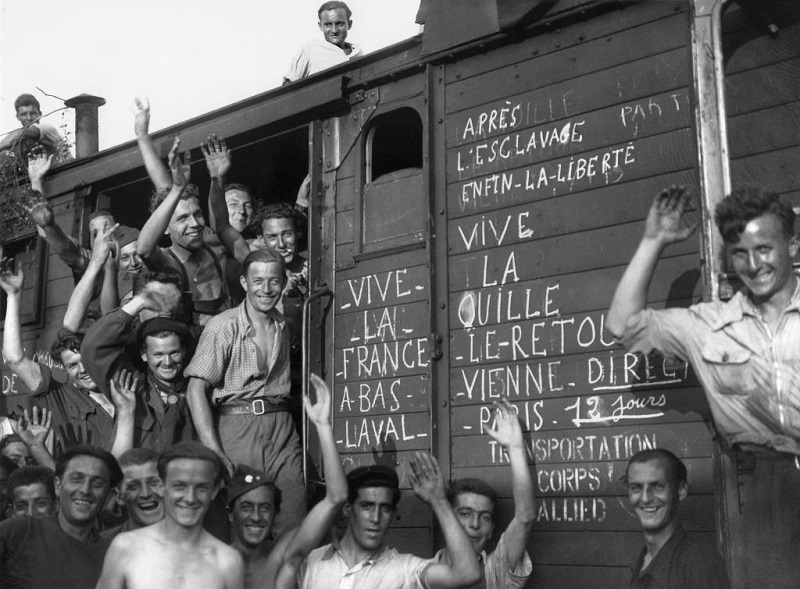
From 9 to 20 September 2015, Agence France-Presse presented, with the support of SNCF, the exhibition “1945. Le retour des absents” (“1945. The Return of the Absent”) at the Orangerie du Sénat, in Paris. Through its photographic archives, the exhibition tells the story of the return to France of those who had been taken away from the country during the war.
The return of the absent
Between the spring and winter of 1945, nearly two million French people — prisoners of war, deportees and STO conscripts (Service du travail obligatoire, France’s forced labour scheme) — were repatriated from Germany.
In Paris, several places became emblematic of these returns, notably the Hôtel Lutetia, the Gare d’Orsay and the Gaumont Palace cinema. Events and ceremonies multiplied to mark this major stage of the post-war period. The nation intended to welcome the repatriates and turn the page on the war years to rebuild a united France.
But behind this drive for unity, the conditions of return and the welcome given to the different groups revealed very different perceptions and treatment.
Attention was first focused on political deportees, then on military prisoners, who had been away from their country for five years.
The return of STO conscripts and volunteer workers, like that of the “Malgré-nous”, Alsatians and Mosellans forcibly enrolled in the German army, met with more reserve. As for the Jewish victims of the Holocaust, they were barely distinguished within this crowd of repatriates.
AFP photographs, witnesses to the return
Reborn after the Liberation, AFP mobilised its teams of photographers to document these returns. It thus built up an exceptional photographic collection, which would become the largest in the French press.
The exhibition presents previously unseen images, bearing witness to reunions, the welcome given to repatriates and the first moments of their return to France.
A book accompanies the exhibition
The exhibition is accompanied by the book Le Retour des absents, by Alain Navarro, an AFP journalist, with a preface by Annette Wieviorka, published in 2015 by Éditions Stock.