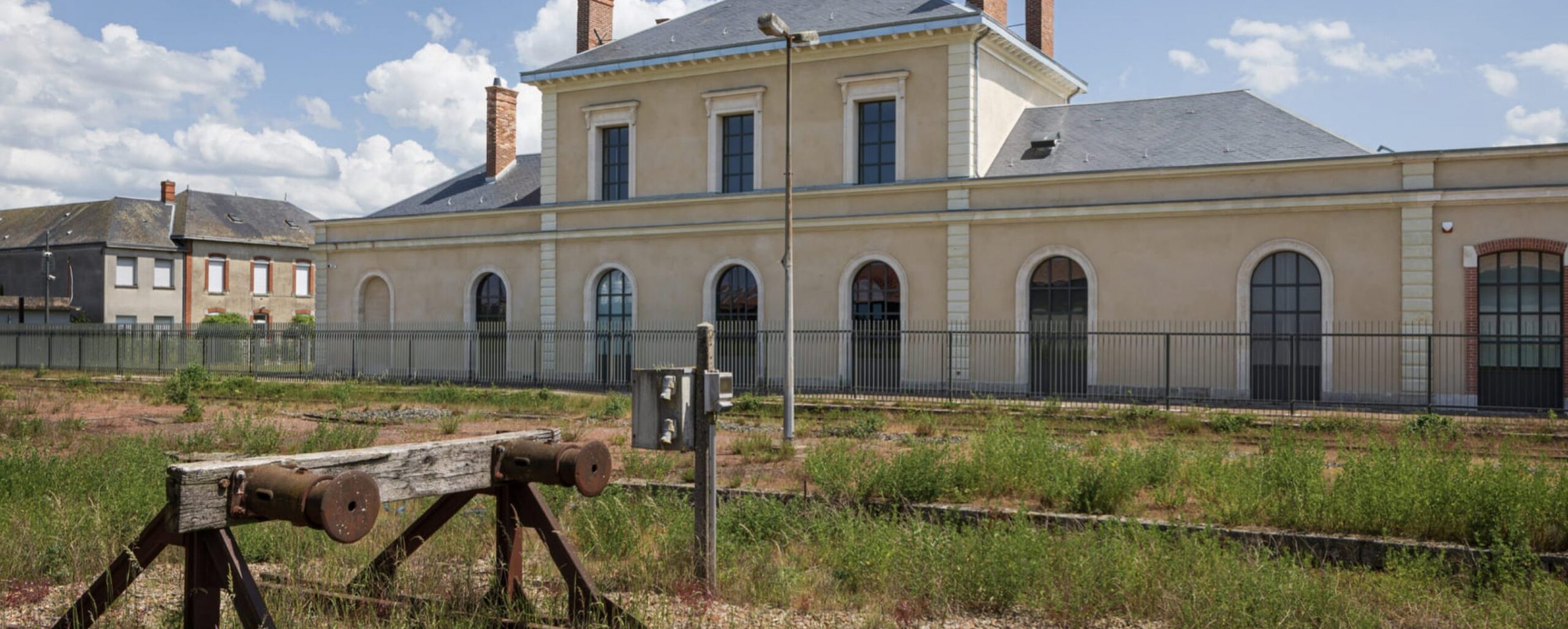
Following a partnership agreement signed in May 2017, SNCF and the Mémorial de la Shoah launched a project to create a site of memory in the former Pithiviers passenger station, in the Loiret department. Opened in 2022, this site tells the story of the station and recalls the role it played in the internment and deportation of the Jews of France during the Second World War.
Pithiviers, from deportation station to site of memory
Between 1941 and 1943, the camps at Pithiviers and Beaune-la-Rolande were two major sites for the internment of Jews in France. Nearly 16,000 people were interned there during this period. Many first arrived in the Loiret via the Pithiviers and Beaune-la-Rolande stations, before being transferred to camps in the Paris region, mainly Drancy, which became the main assembly camp before deportation.
The history of Pithiviers is notably marked by the Vel’ d’Hiv’ round-up, carried out on 16 and 17 July 1942. After being arrested in Paris and its suburbs, thousands of Jewish families were taken to the camps in the Loiret. Among them were nearly 4,400 children. Interned with their parents in Pithiviers or Beaune-la-Rolande, they were gradually separated from them in the summer of 1942. When the adults were transferred to Drancy, the children were left alone in the Loiret camps.
In Pithiviers, several hundred children were thus left without their parents. From August 1942, they were in turn transferred to Drancy, in groups, under particularly difficult conditions. Separated from their families, they were then deported to Auschwitz-Birkenau. The vast majority of them never returned.
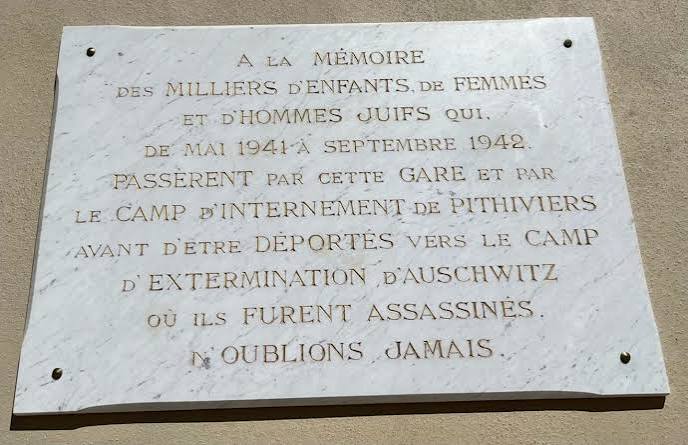
In total, 8,100 Jews interned in the Loiret camps were deported directly to Auschwitz-Birkenau, in eight convoys that departed from the Pithiviers and Beaune-la-Rolande stations. These convoys, organised between 1942 and 1943, represent one of the stages in the implementation of the policy to deport the Jews of France. The Pithiviers station thus became an essential site for understanding the process that led from arrest and internment to deportation.
A station at the heart of the history of deportation
The Pithiviers passenger station occupies a particular place in this history. It was one of the transit points through which thousands of people were taken to the camps or transferred from them. The railway lines directly connected the internment sites in the Loiret to the other sites of the concentration and deportation system set up in France and in Europe.
Today, the former station preserves the memory of these events. The site of memory created by SNCF and the Mémorial de la Shoah places the station back in its historical context and shows the different stages in the journey of interned people: arrest, transfer, internment, separation of families, and then deportation.
An information and education centre
Housed within the former station building, the information and education centre covers nearly 400 m². It offers an exhibition dedicated to the history of the internment of Jews in the camps of Pithiviers and Beaune-la-Rolande and to their deportation. Particular attention is given to the history of the station and its role in the transfers and departures of convoys.
Archival documents, photographs, testimonies and historical resources make it possible to trace the paths of interned people and to place their individual stories within the broader context of the persecution and deportation of the Jews of France.
The centre also has an educational purpose. Designed to welcome groups, particularly school classes, it offers educational activities that allow younger generations to discover this history, work with historical sources and reflect on the mechanisms of persecution, exclusion and deportation. The site thus offers a space to learn, pass on and keep alive the memory of the victims.
A site within a wider network of memory
The Pithiviers site of memory is run and led by the Mémorial de la Shoah. It is part of a wider network of sites and initiatives dedicated to the memory of the Holocaust in France and works in complement with CERCIL – Musée-Mémorial des enfants du Vel’ d’Hiv’.
Located in Orléans and created in 2011, CERCIL is dedicated to the history of the Pithiviers and Beaune-la-Rolande camps and to that of the children who were interned there. It has a resource centre and a permanent exhibition allowing visitors to explore in depth the history of internment and deportation in the Loiret.
The complementary nature of the two sites makes it possible to connect the history of the region, that of the Loiret camps and that of the victims who were interned there. In Pithiviers, the former station is a tangible reminder of the role of the railway in forced displacement and deportations; in Orléans, CERCIL allows this history to be explored in depth through its collections, archives and educational work.
By turning the former Pithiviers station into a site of memory, SNCF and the Mémorial de la Shoah are helping to preserve the memory of those who were interned and deported there, and to pass on this history to future generations.

Find out more about the Loiret camps
Speech by Eric de Rothschild at the station’s inauguration, 2022