Opened in 2013, the Lieu de Mémoire is a unique site devoted to the history of the Righteous and Resistance members during the Second World War.
A land of refuge and solidarity
Between 1940 and 1944, thousands of persecuted people, most of them Jewish, found refuge, protection and assistance in Le Chambon-sur-Lignon and the villages of the Vivarais-Lignon plateau.
Faced with the persecution and antisemitic laws of the Vichy government, local residents, pastors, farmers, teachers and local officials chose to disobey and help those under threat. Through collective mobilisation and everyday commitment, they helped save a great many lives.
Le Chambon-sur-Lignon and the plateau thus became a symbol of civil resistance, carried by populations who, unarmed, stood against the persecution and organised the welcome, protection and shelter of refugees.
A place to pass on this history
In 1990, the State of Israel collectively recognised the inhabitants of Le Chambon-sur-Lignon and neighbouring villages as “Righteous Among the Nations”. Their commitment has also been honoured in Jerusalem, Paris and Washington.
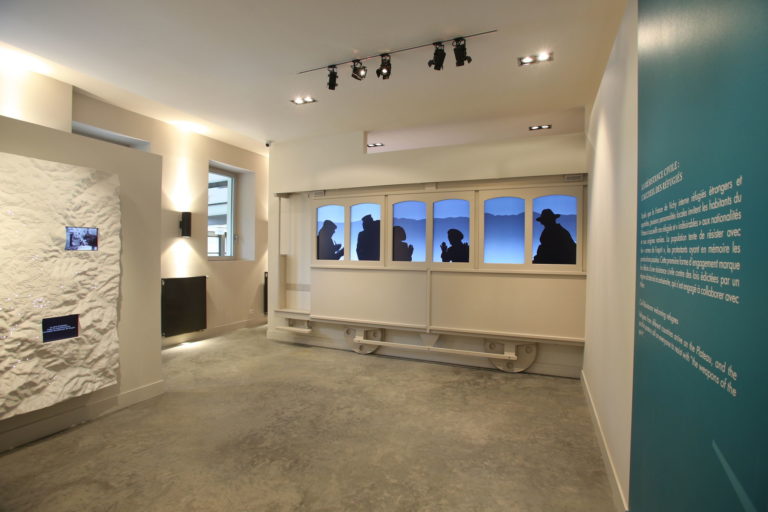
Created from 2010 onwards and unveiled in June 2013, the Lieu de Mémoire au Chambon-sur-Lignon now presents this history of welcome and civil resistance through a historical trail based on the research of a scientific committee and a substantial documentary collection.
A history preserved through archives
The Lieu de Mémoire was built up from numerous archive collections, photographs, testimonies and documents entrusted by families and by various French and foreign institutions. These collections notably include those of Roger Darcissac, the Bohny and Malécot families, as well as several collections held at the Archives départementales de la Haute-Loire.
Since 2020, the Lieu de Mémoire has been managed by the Mémorial de la Shoah, which, in conjunction with its documentation centre, handles the inventory, digitisation and preservation of the archives entrusted to it. These documents and testimonies contribute to historical research, exhibitions and educational initiatives.
SNCF’s commitment
SNCF, a partner in the project, contributed to funding the renovation of the building and the creation of the permanent exhibition. This commitment helps preserve and pass on the history of those who, at the risk of their own safety, chose to protect the persecuted.
Keeping this memory alive, drawing on the archives and passing on the values of solidarity and civil resistance are essential for future generations.