
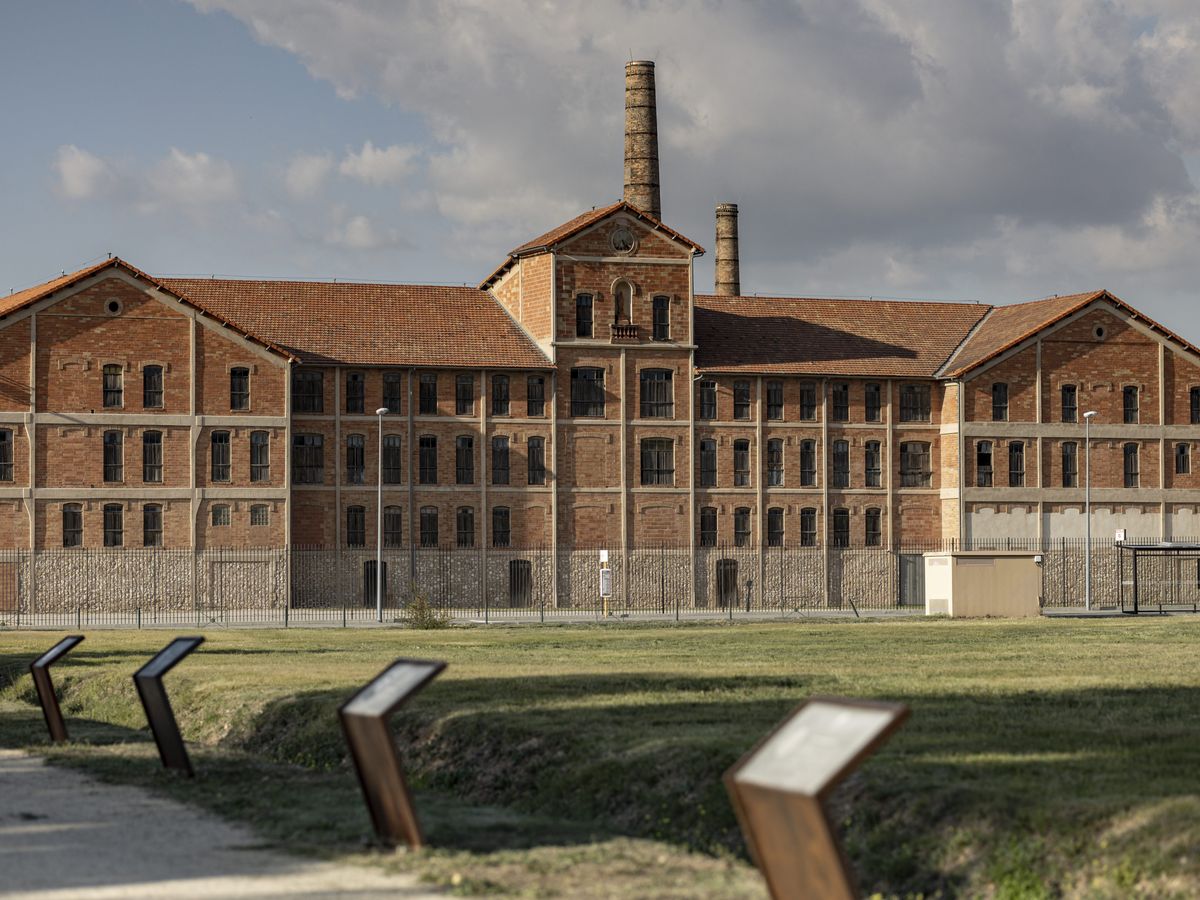
Les Milles, a site of memory for internment and deportation
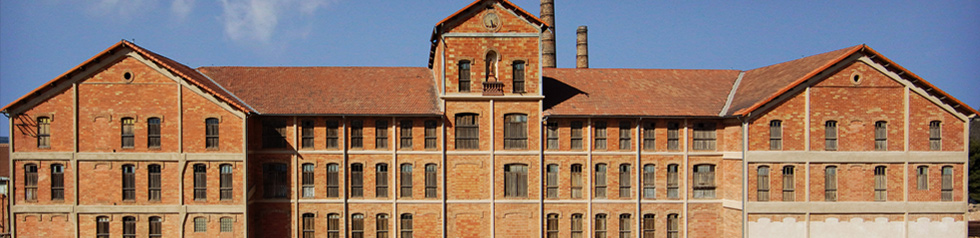
Opened in September 1939 in a former tile factory located between Aix-en-Provence and Marseille, in the Bouches-du-Rhône, the Camp des Milles was initially an internment camp for foreign nationals considered undesirable. Between 1939 and 1942, more than 10,000 people from 38 countries were interned there, mainly German nationals. For many of them, who had fled Nazism, persecution and totalitarian regimes, France was meant to be a land of asylum. Instead, they found themselves locked up in an internment camp.
Among the internees were numerous artists, writers and intellectuals, including Max Ernst, Hans Bellmer and Lion Feuchtwanger. In particularly difficult living conditions, significant cultural activity developed within the camp. The internees produced hundreds of works, evidence of their creativity but also of a form of resistance through art and the mind. Some of these works are still preserved and on display today at the memorial site.
From 1942 onwards, the Camp des Milles also became a transit site in the process of deporting the Jews of France. In August and September 1942, as part of the major round-ups organised by the Vichy government, more than 2,000 Jewish men, women and children were transferred from the Camp des Milles to the camps at Drancy and Rivesaltes. From there, they were deported to Auschwitz-Birkenau.
The creation of a site of memory
The desire to preserve the memory of the deportees from the Camp des Milles took shape in the early 1990s. On 16 December 1990, a “Chemin des Déportés” (Deportees’ Path) was officially opened. It retraces the route taken by deportees from the camp to the trains that were to take them to the destination camps.
On 9 October 1991, the coordination committee formed around this project became the “Association du Wagon Souvenir des Milles”. It brought together local associations of deportees, internees and Resistance members, as well as the Jewish community and the association of former Auschwitz deportees.
In 1992, the association of Auschwitz deportees obtained a former wagon from SNCF. Fitted out as a memorial to deportation, it was inaugurated on 9 November 1992 as part of an information and education initiative entitled “Mémoire pour demain” (Memory for Tomorrow), organised in collaboration with the Aix-Marseille education authority and local public bodies.
This first memorial wagon was one of the first steps in transforming the former camp into a site dedicated to passing on its history.
A new wagon for the memorial site
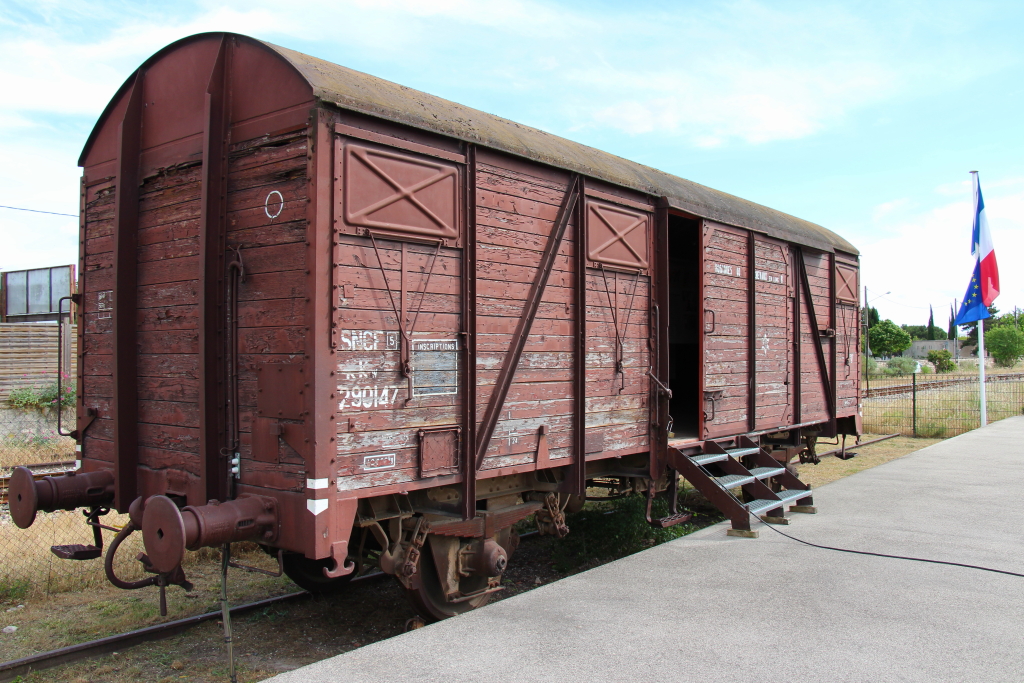
In 2011, a wagon dating from the Second World War, identical to those used for deportations, was found at the Miramas railway marshalling yard. Its renovation was undertaken with financial support from SNCF, the PACA railway workers’ works council and the Provence-Alpes-Côte d’Azur Region. A public fundraising campaign was also launched by the PACA railway workers’ works council together with the Fondation du Camp des Milles.
The restoration, carried out to original specifications at the Nîmes technicentre, restored the wagon to its period appearance. It was inaugurated on 21 September 2015 and replaced the wagon installed in 1992. Present on the camp site, it provides a tangible way to convey the role of rail transport in the deportation process.
A place to understand and pass on history
When the Camp des Milles memorial site was inaugurated in 2012, SNCF supported the educational work developed by the Fondation du Camp des Milles. Designed as both a history museum and a site of memory, the site also has a strong educational purpose. It is aimed in particular at younger generations and seeks to give them the keys to understanding the mechanisms that lead to exclusion, persecution, racism, antisemitism and genocide.
The permanent exhibition draws on the history of the camp, the traces left by internees and the works produced on site. It highlights the different stages in the site’s history, from the internment of foreign nationals to the deportation of Jews, while giving significant space to individual life stories.
The memorial site now also hosts the national exhibition “1942-1944: 11,400 Jewish children deported from France to Auschwitz”, produced by Serge Klarsfeld and the Association des Fils et Filles des Déportés Juifs de France. This exhibition had been shown in several French railway stations between 2002 and 2004 with the support of SNCF. Its presence at the memorial site extends this work of transmission and recalls the fate of the children who were victims of deportation. SNCF supported the project to digitise the exhibition in September 2026.
Through the preservation of the site, its collections, the works of the internees, the memorial wagon and the educational activities carried out there, the Camp des Milles memorial site thus creates a link between history and memory. It recalls the fate of those who were interned and deported while inviting visitors, and particularly younger generations, to reflect on the mechanisms that can lead to the rejection of others and to persecution.