As part of its partnerships with the Mémorial de la Shoah and American institutions committed to passing on the history of the Holocaust, SNCF has supported the presentation in the United States of several exhibitions devoted to the memory and history of the Second World War
« Filmer les camps – Filming the Camps, John Ford, Samuel Fuller and George Stevens, from Hollywood to Nuremberg »
Curated by the Mémorial de la Shoah under the direction of Christian Delage, historian, filmmaker and specialist in the history of Second World War imagery and the Nuremberg trials, the exhibition Filming the Camps was shown in Paris in 2010 before touring the United States with the support of SNCF.
From 22 March to 14 October 2012, it was hosted at the Museum of Jewish Heritage – A Living Memorial to the Holocaust, in New York. This was the first presentation of these documents to an American audience in this form. The exhibition was then shown at several American institutions, notably in Dallas in 2017, in Los Angeles from 2017 to 2018 and in Farmington Hills, Michigan, in 2018.
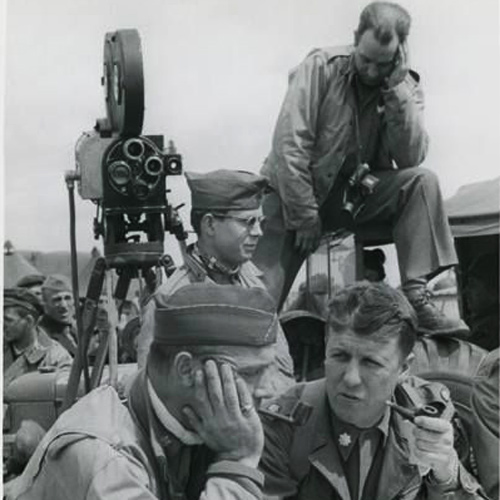
The exhibition focuses on the work of John Ford, George Stevens and Samuel Fuller, three figures of American cinema who helped, during the war, to document military operations and the liberation of the Nazi camps.
- George Stevens, who led the Special Coverage Unit under the orders of General Eisenhower, filmed notably the landings, then the advance of Allied forces in Europe, and the liberation of the Dachau camp. His teams recorded the conditions of detention, the victims and the survivors.
- Samuel Fuller, then a soldier in the 1st Infantry Division and future filmmaker, filmed the liberation of the Falkenau camp, in Czechoslovakia, with a camera his mother had sent him. These images were his first experience as a filmmaker.
- John Ford, who led the Field Photographic Branch, played a major role in gathering and organising the footage shot by American teams. The film Nazi Concentration Camps, made from footage shot during the liberation of several camps, was presented as evidence before the International Military Tribunal at Nuremberg on 29 November 1945.
These images, filmed at the time of the discovery and liberation of the camps, are thus both historical documents and evidence used in the post-war judicial proceedings. The exhibition shows how film and photography became essential tools for documenting Nazi crimes and establishing their reality before the courts.
“Hélène Berr, a Stolen Life” in Washington, South Carolina and Florida
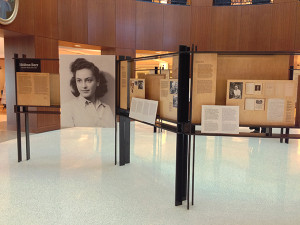
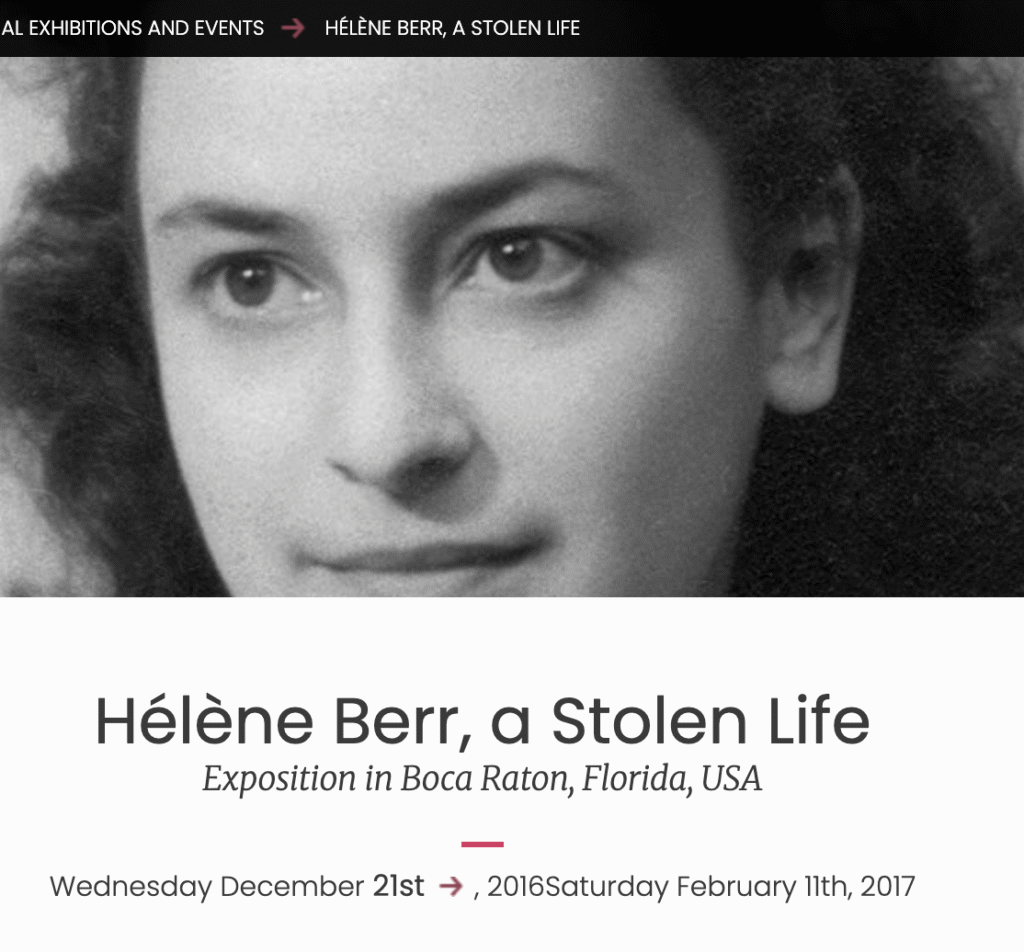
Curated by the Mémorial de la Shoah, this exhibition had already been shown in Paris and in New York, at United Nations headquarters. Through the diary of Hélène Berr, a young Jewish student in Paris, it evokes the context of the Occupation and the persecution of Jews in France. Hélène Berr was deported to Auschwitz in 1944. She died at Bergen-Belsen, a few days before the camp’s liberation by British troops.
In March 2012, the Maison Française in Washington hosted the SNCF-supported exhibition Hélène Berr, a Stolen Life. At the opening, Michael R. Marrus, professor emeritus of Holocaust studies at Toronto, gave a masterclass on the young woman’s diary, highlighting her understanding of the repression closing in around her, her fears and her hopes, and her clear-sightedness.
From March to May 2013, the exhibition travelled to South Carolina, to the Addlestone Library at the College of Charleston, then to Columbia, at the Richland County Public Library.
From 29 October 2013 to 7 January 2014, it was hosted at Nova Southeastern University in Fort Lauderdale, Florida.
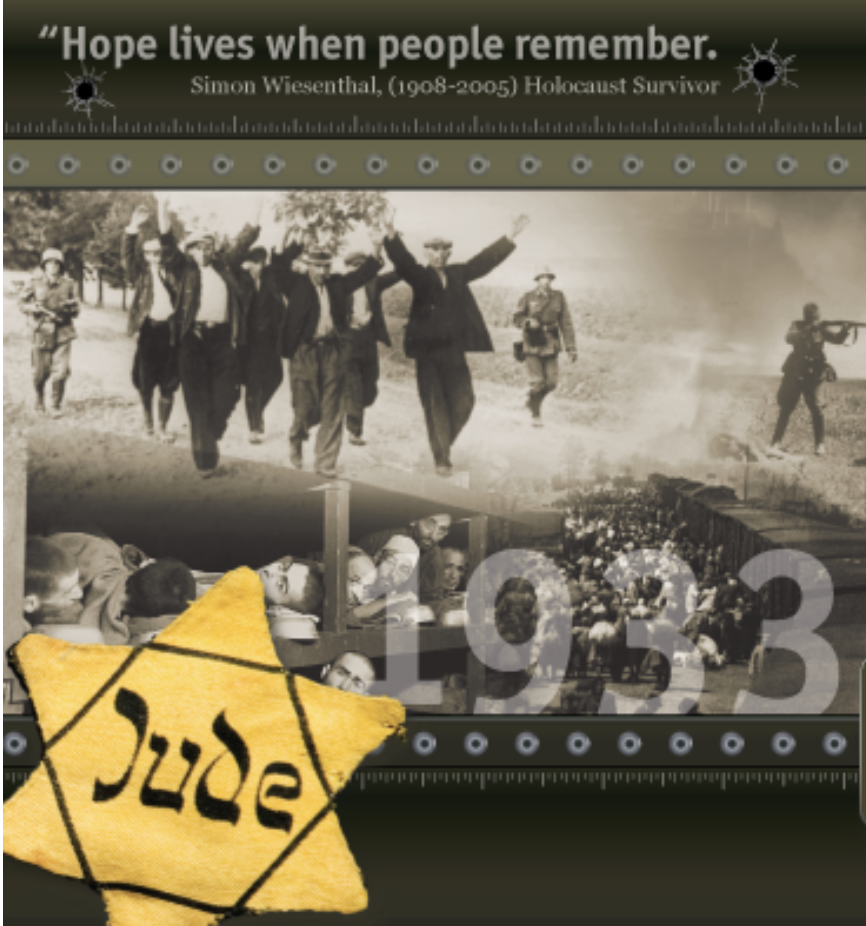
“The Courage to Remember the Holocaust 1933-1945”
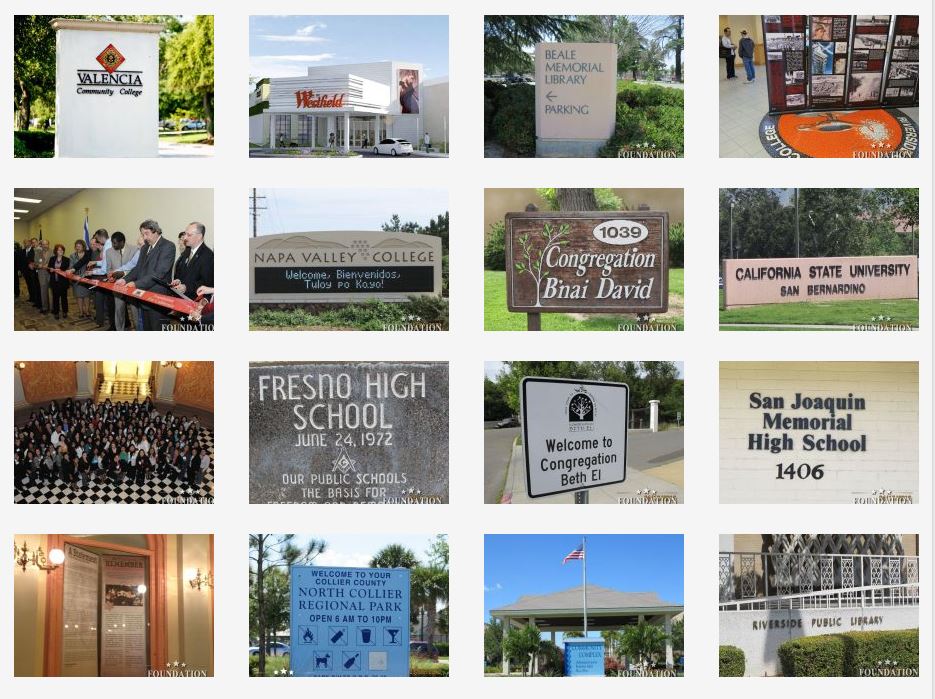
The Courage to Remember the Holocaust is a touring exhibition across the United States, produced by the Simon Wiesenthal Center and circulated by the Foundation for California.
The Simon Wiesenthal Center, headquartered in Los Angeles, aims to preserve the memory of the Holocaust, notably through educational work aimed at combating racism, antisemitism and hatred of others. It receives sponsorship from SNCF for this purpose.
As part of a partnership with the Foundation for California, SNCF supported the presentation of the exhibition from 2011 to 2014, which is both a tribute to the victims of the Holocaust and an educational tool against all forms of discrimination and exclusion. In 2015, the exhibition was digitised, again with SNCF’s support, and continues to circulate in this form.
At the opening of the exhibition in Broward County, Florida, on 16 May 2012, Alain Leray, CEO of SNCF America, recalled that SNCF’s interest « in Holocaust education is in fact a commitment. A commitment that strives, tirelessly, to raise awareness among and reach current and future generations, to remember so that this never happens again. »
As the exhibition travelled through California and Florida, representatives of the highest American institutions wished to express their gratitude for this work of collecting, education and remembrance.