During his internment at the Royallieu camp, in Compiègne (Oise), the poet Robert Desnos wrote to his partner, Youki:
“I missed the last departure and I really hope not to be on the next one. I am here with very good and kind people: communists, Gaullists, royalists, priests, nobles, peasants. It’s an extraordinary mix.”Robert Desnos, poet
These few lines bear witness to the diversity of the men interned at Royallieu. Arrested by the Gestapo in February 1944, Robert Desnos was deported on 27 April 1944. After several transfers between Nazi camps, he died at Terezín, in Czechoslovakia, on 8 June 1945, a few weeks after the liberation.
Royallieu, a camp at the heart of German repression
- 1913: construction of the Royallieu barracks in Compiègne
- 1941: the site was converted into an internment camp under German administration
Built in 1913, the Royallieu barracks were converted by the Wehrmacht in 1941 into an internment camp, then placed under the authority of the German police. The site became one of the main assembly and transit points for prisoners arrested by the German authorities in France before their deportation to the Nazi camps.
The interned population was particularly diverse: Resistance members, political prisoners, foreign civilians, notably Russians and Americans, as well as Jews. For many of them, Royallieu was a stopover before deportation. Numerous convoys left Compiègne for the Nazi concentration and extermination camps, notably Buchenwald, Dachau, Mauthausen and Auschwitz.
Nearly 45,000 people were interned there between 1941 and 1944.
A site of memory
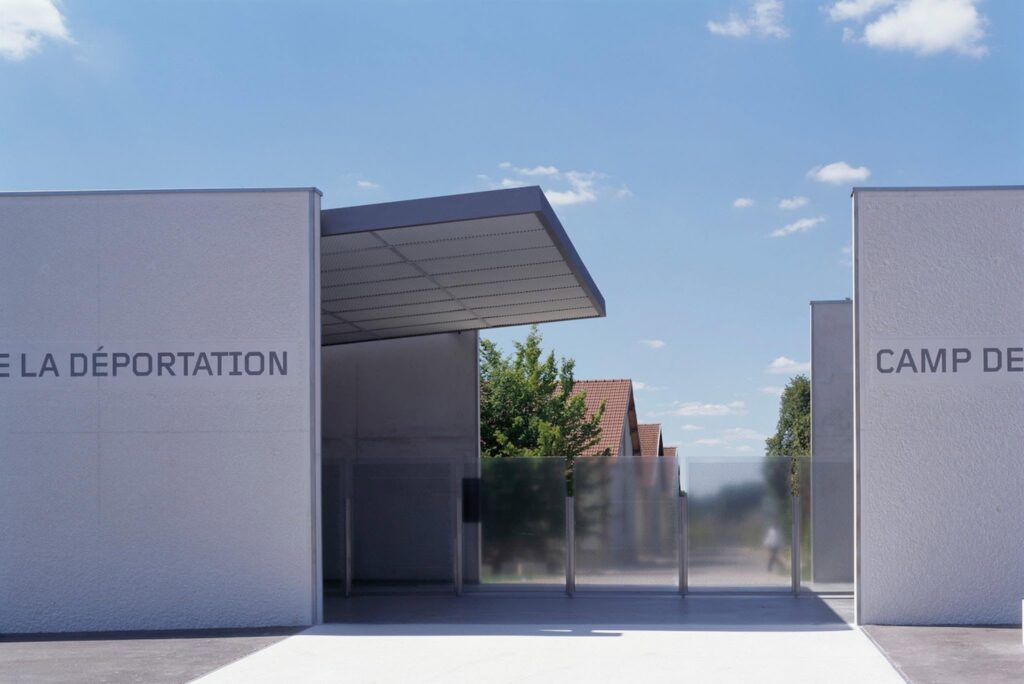
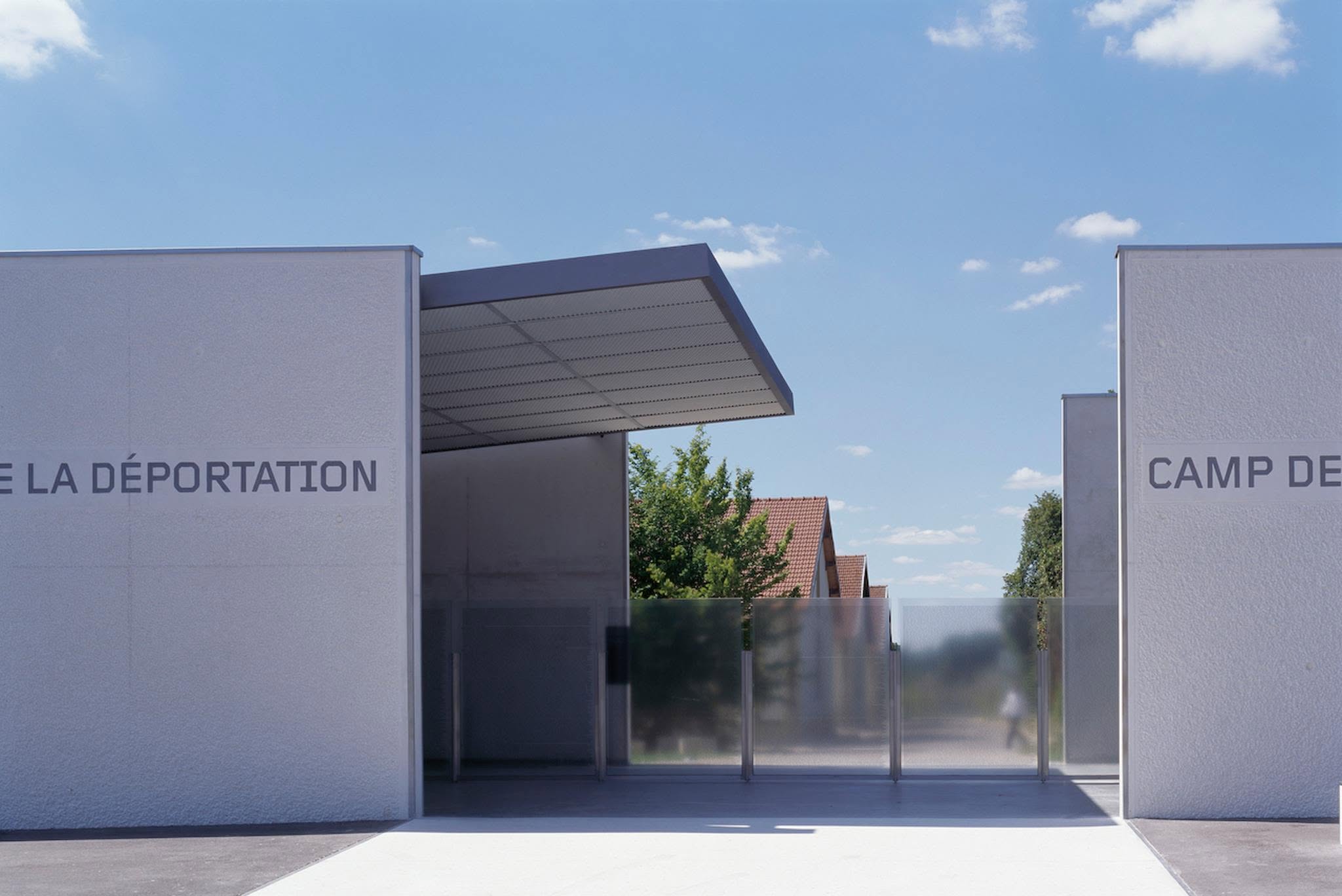
Opened in February 2008 on the site of the former camp, the Mémorial de l’internement et de la déportation preserves and passes on the history of Royallieu and of those who were interned there
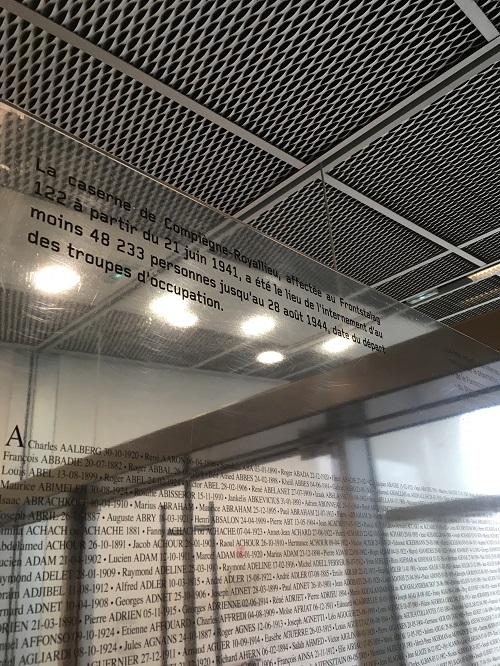
The historical trail is built around two preserved buildings of the former barracks and several landmark sites: the chapel, the escape tunnel and the wall of names. Archival documents, photographs and survivors’ testimonies help to piece together the history of the camp and the individual journeys of those detained there.
The Memorial also offers an educational service for young audiences and a research space for scholars. It thus combines heritage conservation, historical research and the passing on of the memory of internment and deportation.
On 14 February 2020, the third version of the « Wall of Names » was unveiled, paying tribute to the 43,553 people who passed through the camp during the Second World War.
SNCF supported the research work that made it possible to draw up this list, expanded by 4,700 names, and the renovation of the installation.