In 2012, SNCF entered into a partnership agreement with Yad Vashem, the World Holocaust Remembrance Center, in Jerusalem. This partnership made it possible to support a broad research project dedicated to the deportation of the Jews of Europe during the Holocaust, entitled “Transports to Extinction: Holocaust (Shoah) Deportation Database”.
Documenting deportations from France
SNCF’s support focuses in particular on the French component of this research. It aims to reconstruct the routes of the convoys of Jewish deportees that left France and to document the journeys of the 75,721 people deported from France, the vast majority of whom were sent to Auschwitz-Birkenau.
This research draws in particular on the work of Serge Klarsfeld, published in the Mémorial de la déportation des Juifs de France, a reference work listing the convoys and the people deported from France.
It also draws on the study of SNCF’s 1939-1945 archives. A digitised copy of these files was handed over to Yad Vashem in January 2012 to allow researchers to examine the documents relating to the organisation and dispatch of the convoys. These sources are cross-referenced with other documents: survivor testimonies, private archives and photographs, which help complete the understanding of individual journeys and convey, beyond administrative data, the lived experience of deportees.
SNCF’s commitment to preserving the memory of the Holocaust
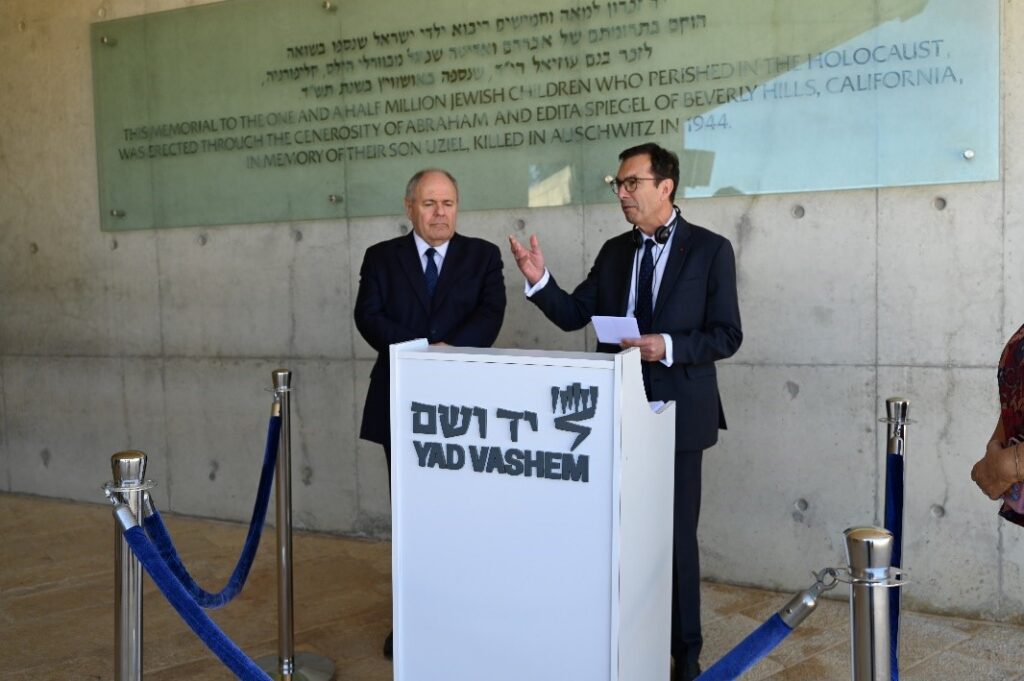
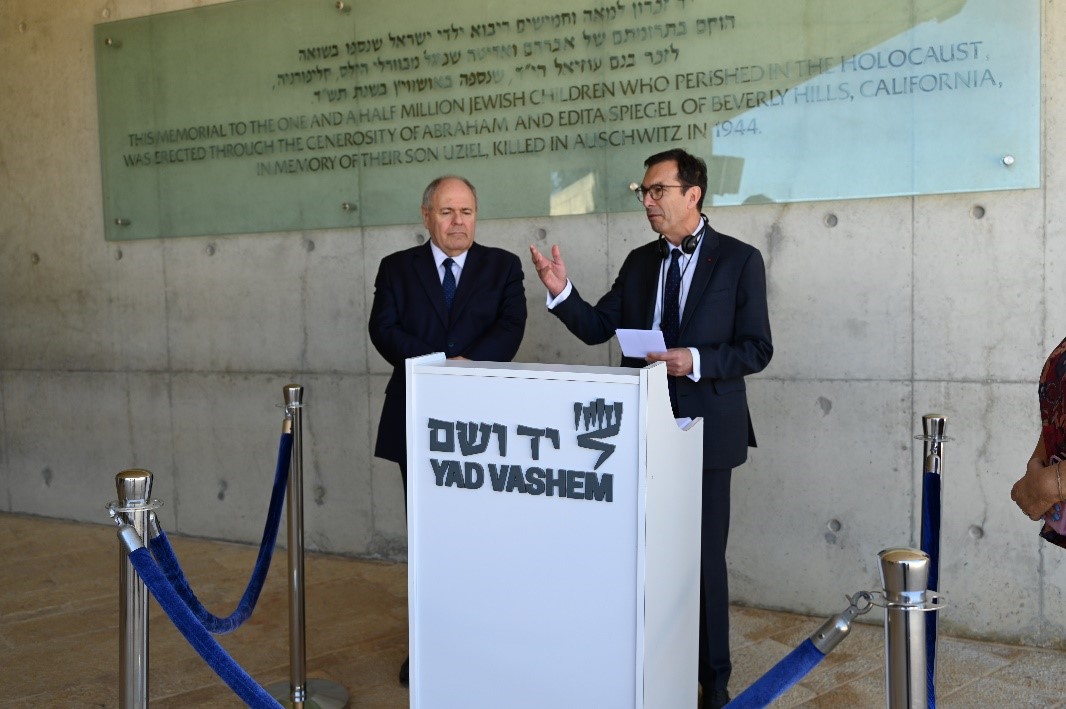
In April 2025, Jean-Pierre Farandou, then Chairman of SNCF, visited Yad Vashem in Jerusalem, where he was welcomed by Dani Dayan, Chairman of Yad Vashem, as he emerged from the Children’s Memorial. The meeting provided an opportunity to reaffirm SNCF’s commitment to preserving the memory of the Holocaust and to acknowledge the company’s role in the deportations during the Second World War.
Dani Dayan first expressed his gratitude to Jean-Pierre Farandou for his visit and highlighted the importance of SNCF’s commitment to Holocaust remembrance. He noted in particular that SNCF was among the first French organisations to publicly acknowledge its role in the deportations.
Chairman Farandou spoke of the profound emotions he experienced during his visit to Yad Vashem and stressed the importance of drawing lessons from the Holocaust. “Our main concern today is to learn the lessons of the Holocaust so that such a tragedy never happens again,” he said. He also emphasised the importance of preserving access to historical facts and sources, noting that “in this world of fake news, many have an interest in facts being concealed or distorted.”
Dani Dayan then shared the story of Yitzhak (Iso) Schonberg, who was deported on a train operated by SNCF, and read aloud his poignant final letter. He also highlighted several of SNCF’s contributions to historical research and remembrance, including making its wartime archives available to researchers, thereby helping to deepen understanding of the deportations. He also acknowledged SNCF’s support for making Yad Vashem’s resources available in French, helping to make these historical sources accessible to a wider audience.
The meeting highlighted the importance of cooperation between memorial institutions and organisations with a direct connection to history: preserving sources, supporting research and passing on a documented understanding of the Holocaust to future generations. Chairman Farandou reaffirmed SNCF’s commitment to continuing this work of transparency and historical research, drawing on its archives and on the establishment of historical facts.