From 2012 onwards, SNCF launched, with Rails et histoire – Association pour l’histoire des chemins de fer, a broad nationwide campaign to collect testimonies devoted to the life and work of railway workers and their families around the time of the Second World War. The aim was to gather the accounts of those who had lived through this period, while the last surviving witnesses could still share their memories.
A nationwide collection effort
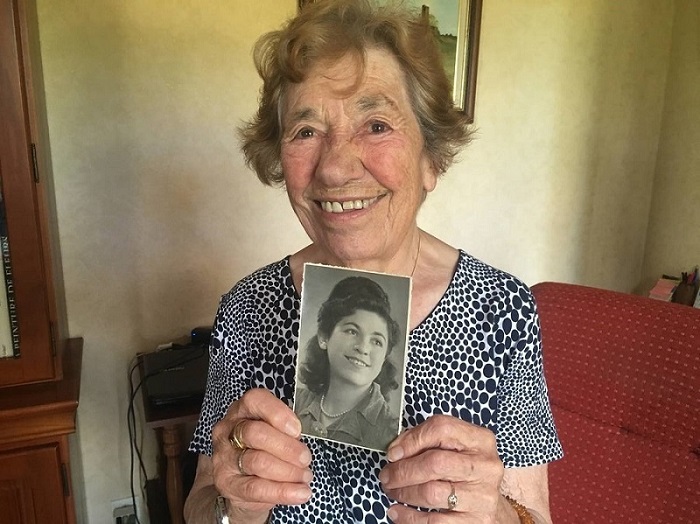
As part of this partnership, Rails et histoire conducted and promoted the interviews. SARDO (Service Archives Documentation SNCF) collected and preserved the personal documents entrusted by the witnesses: photographs, letters, memoir notebooks, professional documents, objects and family archives.
The appeal launched to the railway community received a significant response:
- nearly 700 responses;
- more than 200 offers of interviews;
- 210 interviews conducted throughout France between March 2012 and December 2013;
- nearly 410 hours of previously unpublished recordings.
Brought together under the title “Vie et travail au quotidien pendant la Deuxième Guerre mondiale : mémoire et récits de cheminots”, this collection offers a particularly rich perspective on the railway world from the 1930s to the 1950s.
Railway workers’ lives, told by those who lived them
The interviews do not focus solely on the Resistance. They cover a wide range of situations: apprenticeships and early careers, life in railway workers’ housing estates, working conditions, the presence of the occupying forces, requisitions and forced labour, rationing, family life, bombings, as well as acts of resistance and events of the Liberation.
The witnesses also recount the early years of the post-war period and reconstruction. Their accounts bring to light the everyday realities, the forms of solidarity, and the differences in experience depending on trade and railway region.
Testimonies that complement the archives
The collection addressed a heritage concern: preserving the voices of witnesses whose memories risked being lost. These recordings complement the written and administrative archives by providing access to individual experiences often absent from institutional records.
Photographs, correspondence and other personal documents enrich the interviews and make it possible to cross-reference sources to better document the history of railway workers and their families during and after the war.
A sound exhibition at the Archives nationales
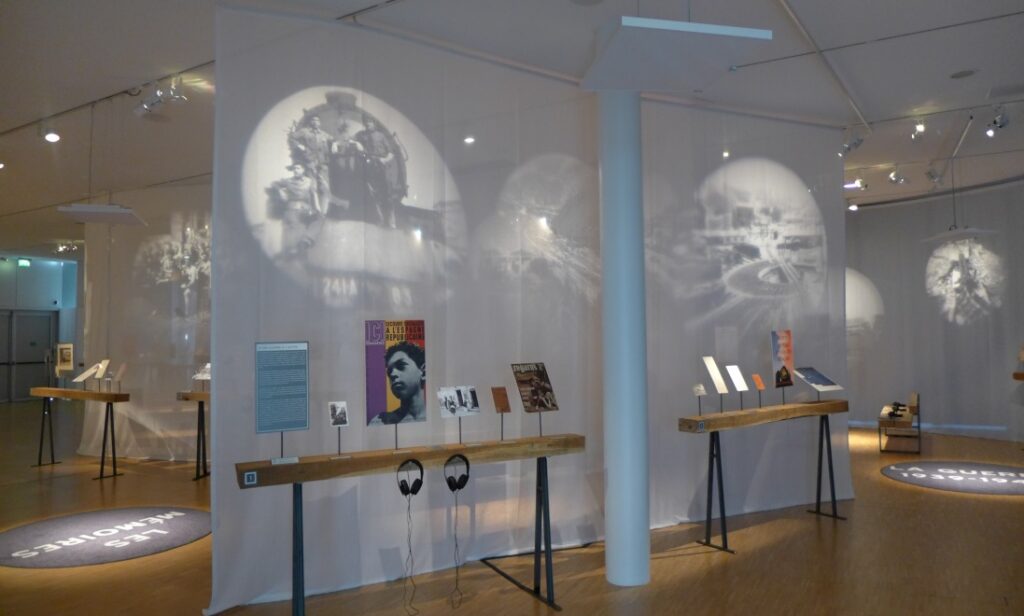
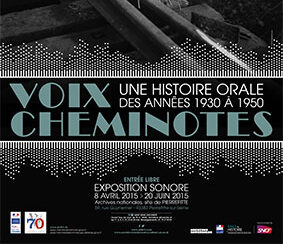
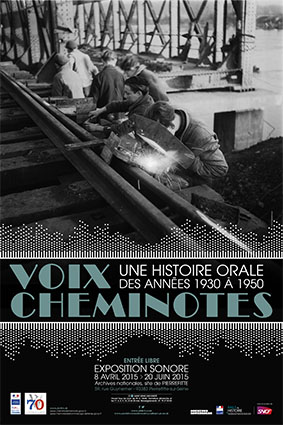
To mark the commemorations of the 70th anniversary of the Liberation, the Archives nationales presented, at their Pierrefitte-sur-Seine site, a sound exhibition devoted to railway workers during the Second World War. Shown from 8 April to 4 July 2015, Voix cheminotes: une histoire orale des années 1930 à 1950 grew out of a broad campaign to collect testimonies carried out in 2012 and 2013, following an appeal launched by SNCF to its railway workers.
Designed by Rails et histoire, the exhibition lets visitors hear extracts from these interviews and discover an oral memory that had until then been largely unpublished. The testimonies form the heart of the exhibition, presented as sound extracts and audiovisual montages, alongside archival documents and objects gathered during the collection process.
The exhibition focuses in particular on young women and men aged 15 to 30 at the time of the Second World War, many of whom began their working lives at SNCF. Through their accounts, it recreates the years from the 1930s to the 1950s through the closest possible lens of individual experience: work, everyday life, the war, the Occupation and the upheavals of the period.
By giving central importance to the voices of these railway workers, Voix cheminotes offers a different perspective on this period. The great events of history are here approached at an individual level, through personal journeys, memories and experiences that complement written sources and contribute to a better understanding of the social and professional history of railway workers.
To take a virtual tour of the exhibition, with sound and images, on the Archives nationales website