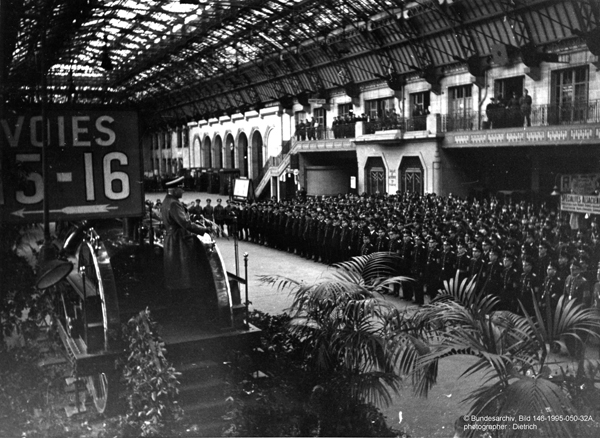
Between 1939 and 1945, SNCF faced an unprecedented situation. A public company created in 1938, it had to carry on its activity in a context of war, then of Occupation, under the authority of the Vichy government and under pressure from the German authorities. The rail network was then used for the military and economic needs of the occupying forces, but also for the transport of prisoners, deportees and conscripted workers. At the same time, many railway workers joined the Resistance, at a heavy cost.
A requisitioned company
On 3 September 1939, France declared war on Germany, two days after the invasion of Poland. Created a year earlier, SNCF then put its material and human resources at the service of mobilisation and the war effort.
In the spring of 1940, the German offensive led to the defeat of France. On 22 June, Marshal Pétain’s government signed the armistice convention at Rethondes.
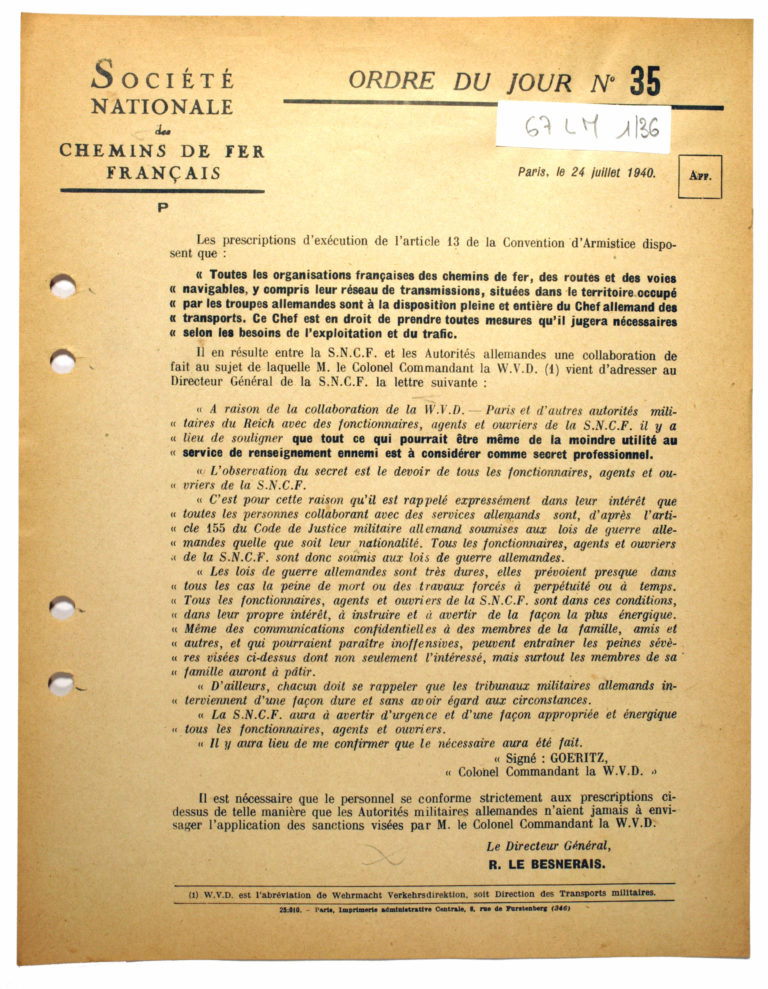
All French transport organisations located in the occupied territory are at the full and complete disposal of the German Head of TransportArmistice convention, article 13, 22 June 1940
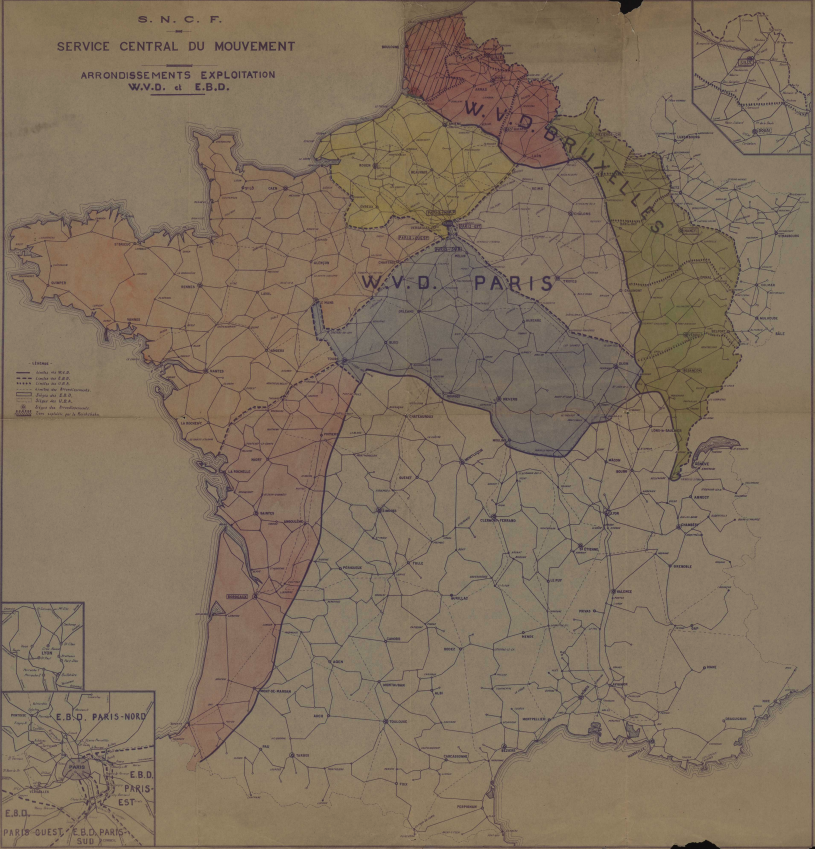
SNCF, because of its strategic role in the movement of people and goods, thus found itself under a double constraint: it had to follow the directives of the Vichy government while complying with the demands of the occupying authorities. In the occupied zone, its activity was placed under the control of the Wehrmacht-Verkehrsdirektion (WVD), the German transport directorate. In the unoccupied zone, the railways remained under the authority of the Vichy government.
Rail then became an essential means of transport. The rationing of fuel and tyres, along with vehicle requisitions, severely limited road transport. The railway was thus indispensable for supplies, industry and trade. German military transport and the shipment to Germany of goods taken from France were nonetheless among the priorities imposed by the occupying forces.
From autumn 1940 onwards, SNCF was thus compelled to put substantial resources at the disposal of the German authorities, including 2,000 locomotives and 85,000 wagons.
The railway at the heart of the system of repression and deportation
The railway system was also used by the occupying forces to organise the movement of prisoners and persecuted people. In the summer and autumn of 1940, more than a million and a half French prisoners of war were thus transported to the Reich’s Oflags and Stalags.
From 1941 onwards, rail transport also played a part in the policy of repression and deportation carried out by Nazi Germany. Tens of thousands of Resistance members, opponents and persecuted people were deported to concentration camps. Then, in 1942, the railway was used for the deportation of the Jews of France to the extermination camps. Between 1942 and 1944, 75,721 Jews were thus deported from France as part of the « Final Solution », including about 11,400 children. The German authorities dictated the composition of the convoys, the routes, the timetables and, from June 1942 onwards, the use of freight wagons. The trains were taken to the German border, then handed over to the Reichsbahn.
The railway system was also mobilised for the transfer to Germany of workers conscripted under the Service du travail obligatoire (STO), France’s forced labour scheme.
These transports were part of a system organised and controlled by the German authorities. Railway workers were subject to the constraints of the Occupation and to German wartime law, whose penalties could extend to the death sentence or forced labour.
Railway workers committed to the Resistance
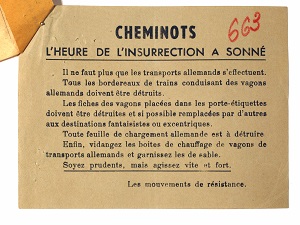
At the same time, many railway workers joined the Resistance. Their knowledge of the network, installations and train movements enabled them to take part in a wide range of actions: intelligence gathering, sabotage, helping people being sought, passing on messages, and protecting and moving equipment.
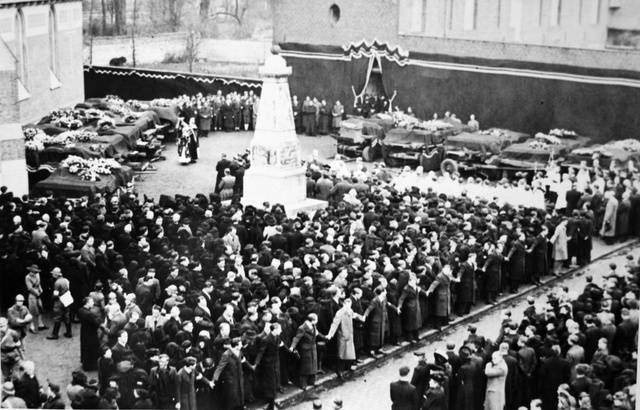
This commitment came at a heavy price: more than 2,200 railway workers fell victim to the repression, shot or dying in deportation.
In the summer of 1944, railway workers also played an important role in the Liberation. They took part in particular in carrying out the « Plan Vert » (« Green Plan »), intended to disrupt rail communications and prevent German reinforcements from reaching Normandy after the Landings. In August 1944, their strike helped trigger the Paris uprising.
From the first months of the Liberation, railway workers were finally mobilised to repair a network heavily damaged by fighting, bombing and sabotage. They thus took an active part in restoring communications and rebuilding the country.
Find out more

Key dates
SNCF under the control of the occupying forces
Railway workers’ resistance
Railway workers who fell victim to the repression